

State of Wonder (1983) & A Canterbury Tale (1944)

Nathan McBride
Two movies to immerse you in the tall grass and the long country roads of peaceful, small-town life—in the midst of war.
State of Wonder (1983; YouTube) (It’s in 7 parts, but it’s all there. It’s literally nowhere else in the entire online streaming marketplace.)
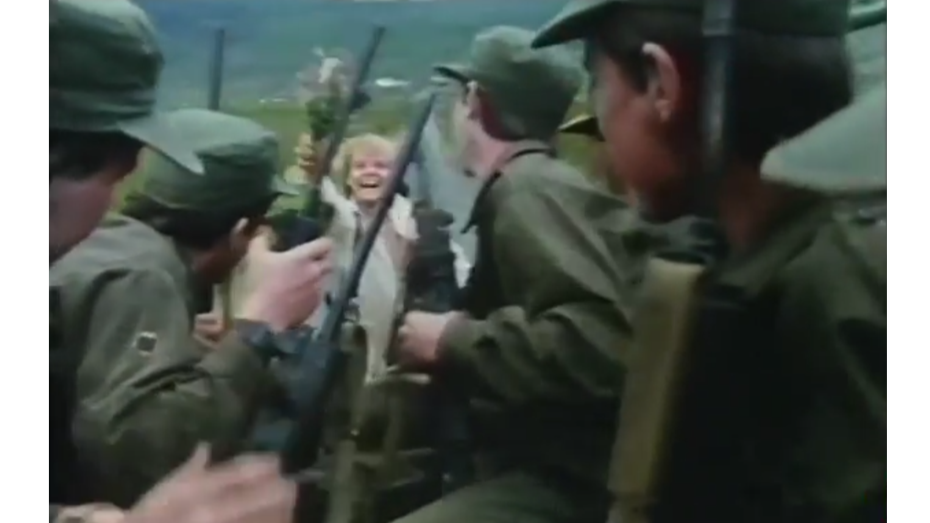
When soldiers come to a small Irish town to stop the approaching radical “War for Peace” anarchists, a young man with mental disabilities shows another way to peace. The best word for this movie is sweet—and yet not naïve. It is set in a beautiful country town, inhabited by relatable small-town figures: the nervous police chief; the hip young priest (played by the writer-director); the high-strung Italian restaurant owner; the local girl who married a prince and won Eurovision and the town throws a party when she comes back; and Pichirica, the cheerful young man who lives on the hill and picks flowers for his neighbors. It feels like one of those places where everyone knows everyone. The kind of place where my grandmother grew up; the pueblo that still dots the forgotten corners of our beautiful earth; a realm where time slows down to a walking pace.
The characters and locale are memorable, but just as compelling is the writing. Pichirica’s philosophy is charming in its peaceful simplicity. He has eyes of love and generosity and joy. He has the innocent, rebelliously simple goodness of a Diamond from At the Back of the North Wind or a Billy Budd. That scene where he grinningly chases the soldiers’ truck offering them a handful of flowers is this movie in a nutshell. But so is that subtle moment in the next scene, where the sergeant offers his hand to shake the nervous police chief who at the same moment raises his hand to salute—so they don’t shake hands because of formality, order, fear. It is a tragedy of two sides determined to bring peace through war, making them strikingly similar. It is a story about all those civilians caught in the middle, not least in the British-Irish conflict going on when this movie was made. This is a movie about becoming human again, remembering God and the lilies of the field, discovering freedom to live in a state of… well, you know.
For sensitive viewers: A little smoking and drinking. Maybe a pair of mild swear words (I don’t remember)? The two warring sides are going to climax in a tragically violent but predictable ending. It’s PG.
A Canterbury Tale (1944; Pluto, Roku, Tubi, YouTube)
In the midst of World War II, a young woman, an American GI, and a British soldier reach a small town outside of Canterbury and discover a gentle country rhythm, the town’s rich history, spiritual hope—and a mysteriously benevolent crime. This is the best movie I have ever seen depicting life during wartime. There is no war in this movie—it is distant, taking place elsewhere—and we are stuck in the daily grind of the homestead. But it isn’t just a grind; it immerses you in the slow, walking pace of the countryside, the play of dozens of children, the feel of tall grass, and the unforeseen common ground that makes encounters across cultures miraculous. Because war, like a pandemic, is a time when everything stops. A time when you encounter where you live in a new way. When you come into contact with people from all over the world. A time to encounter time itself.
This is also my favorite film by Michael Powell and Emeric Pressburger. I have seen (almost) all of them from U-Boat 29 (1939) to The Red Shoes (1948)—and I recommend them all. But this one is special. This isn’t a story of love or danger or art. It’s a story of… life. Simple, everyday life. And the promise of the miraculous that is coming for every one of us.
For sensitive viewers: A little drinking and smoking.
Nathan’s Writing Update
Slowly but surely, I have begun editing my article on the Spanish novel Platero y yo (1917). Slowly but surely!
In the meantime, I have been reading a book about living in a state of wonder, and I will leave you with these beautiful words: “If we knew how to adore, then nothing could truly disturb our peace. We would travel through the world with the tranquility of the great rivers. But only if we know how to adore.” (French friar Eloi Leclerc, paraphrasing St. Francis, quoted in The Universal Christ, Richard Rohr, 2019, p. 75).