Pooh’s Grand Adventure (1997) & The Many Adventures of Winnie the Pooh (1977)

Nathan McBride
Back to school, Christopher Robin!
Pooh’s Grand Adventure (1997; Disney+ or Internet Archive)
When Christopher Robin disappears (leaving only a mysterious note about going to “Skull”), Winnie-the-Pooh and his friends set out on a quest to find him. This direct-to-video release is, paws down, the greatest Pooh story ever told. The music is original and sweeping. The wafting autumn leaves and the music are one and the same. The songs will move you, make you smile, make you think, and even make you cry. Truly.
The imagery is imaginative—not wacky or silly, but unique. Thorns and dark skies and grey cliffs, butterflies and green fields with waterfalls. It’s moody, all the moods. The character voices complement this perfectly. Good old Jim Cummins for Pooh, John Fiedler for Piglet, and Paul Winchell for Tigger (his last time). Rabbit, Owl, and Eeyore feel just as iconic, and all have memorable lines.
The writer-director team had worked heavily on The New Adventures of Winnie the Pooh TV series (1988-1991). This movie feels organically connected to that show (“Come out, wishing star”) and all the previous Disney Pooh releases. Director Karl Geurs would go on to write for Barney. All my toddler-hood, from bear to dinosaur. It takes a lot of research to find who wrote the remarkable songs—because they did virtually nothing else. That makes this movie an even rarer treat.
By the way, the full title is, Pooh’s Grand Adventure: The Search for Christ. Oh wait, I missed a few letters at the end: Christopher Robin. But it might not be a mistake in this Holy Grail of Pooh movies. Truly. I’ll let you decide. At any rate, it is about that kind of love.
For sensitive viewers: The characters get lost and afraid and mistake Pooh for a Pooh-eating monster.
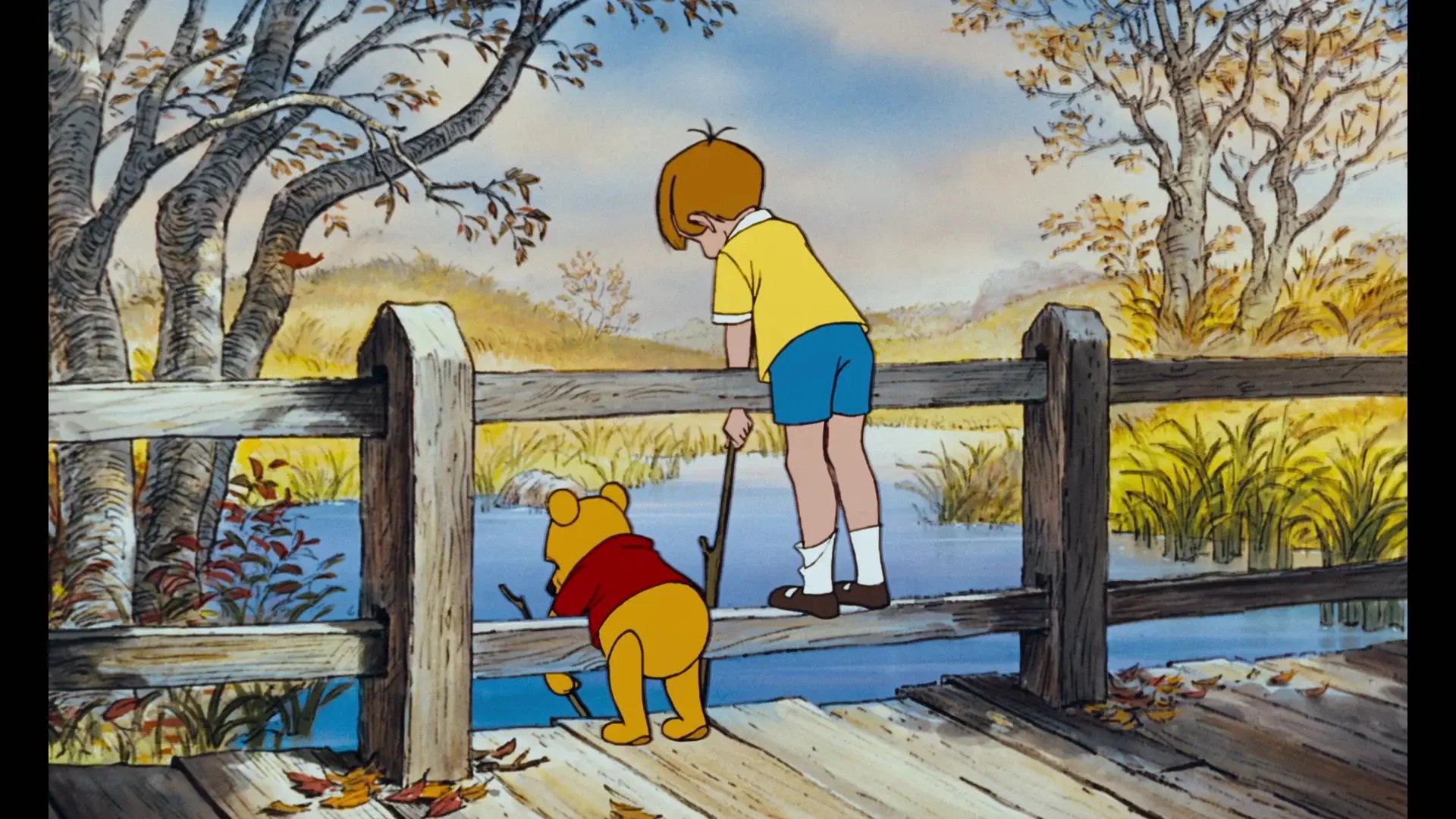
The Many Adventures of Winnie the Pooh (1977; Disney+)
Three vignettes about Pooh and his friends in their search for friendship, safety, and “hunny.” The first two stories in this “storybook” film were produced under Walt Disney in the 1960s. Both of them—“Winnie the Pooh and the Honey Tree” and “Winnie the Pooh and the Blustery Day”—won Oscars. But then, Walt passed away. Then, the Sherman Brothers who wrote the songs split up and left Disney pictures. Two 20-minute shorts do not make a movie. So how did we get this one?
Apparently, amidst the (increasingly mediocre) Disney movies of the 1970s, someone got the idea to add another story to complete a full-length re-release of good-old Pooh. In-between, there would be transitional conversations between Pooh and the Narrator as the storybook flipped from page to page. The result was this movie.
It can feel a bit lopsided. The first two stories are great, but in the third one, something is missing. Songs, perhaps? Yes, the music dries up like a tree in winter as Pooh and Piglet wander around the silent woods. This sort of leaves the contemporary viewer feeling let-down, because it’s not a spectacular ending to this otherwise entertaining variety show.
But there’s still something special about it. The transitions from the boy’s crisp 70s live-action bedroom to the animated storybook and back put the stories in a context of Presence. I don’t know how else to describe it. Pooh is sorry with us that the stories are over, but it’s like, “Everything is okay.” Because even though the stories end, and the storybook closes, the world around it isn’t changed. It’s still beautiful and kind—with perhaps a little more whimsy than before. I daresay that the last story winds down, like a tired music box, helping us wind down as we get ready for bed after storytime.
For sensitive viewers: Pooh has a dream about “Heffalumps and Woozles” that could be mildly frightening for very young viewers.
Nathan’s Writing Update
This week I submitted my video essay on Brad Bird! Then, I got word from another academic journal that a different article I wrote was being rejected. Sigh. As always, the feedback is revealing some creative new ways to make the article better than it was before—and send it to another journal. As Wendy Belcher writes in her excellent Writing Your Journal Article in Twelve Weeks, the most published authors are not the best, but the most persistent. I wish you a week of persistence, friends!
And as we have entered our final summer month, it’s time to set our course for yet another new realm, far, far away…