Nausicaä of the Valley of the Wind & The Sound of Music

Nathan McBride
Dazzling stories of salvific love. Two of my favorites.
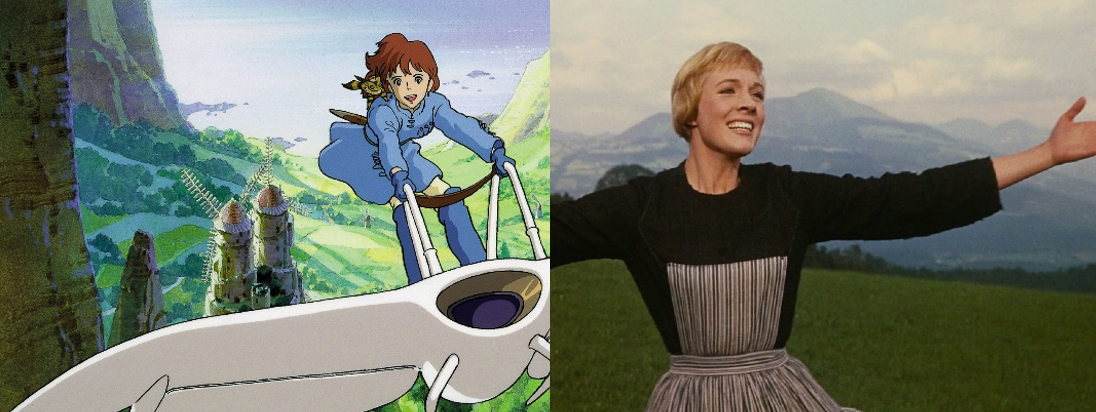
Nausicaä of the Valley of the Wind (1984; HBO Max or your library)
As the toxic forest and enemy kingdoms encroach, a princess ventures out to make peace for her world—before it’s too late. This movie is science fiction with a touch of fairy tale and parable. Its world is compelling, both in the exotic futuristic plant life and the simple beauty of the Valley of the Wind where Nausicaä and her people live. We can’t help rooting for these villagers as we see the dangers they face: ambitious enemies, postapocalyptic pollution, and most of all, the fear-driven hatred lodged in every human heart. Amidst all this, Nausicaä shines resolute, wise, and most of all, kind.
When I ask my peers what their favorite Miyazaki/Studio Ghibli movie is, they almost always say Princess Mononoke. I saw that one before Nausicaä, and then I saw Spirited Away (the other common favorite). These latter Miyazaki movies are all so complex that they’ll overwhelm you with wonder, but I had a hard time relating to their mythical and ancient worlds. This one was in familiar territory: sufficiently plausible science fiction. Mononoke’s “battle of five armies” style is incredibly epic, and perhaps its grittier style avoids any potential melodrama of simple “good guys” and “bad guys.” But for me, even though the protagonist is truly good, the story is so complex, and sad, and disturbing, that it’s hard to feel like the battle can be won. Worse, it feels like the hope rests in the wrong place at the end. Then I saw Nausicaä. Ah, yes. The Story.
Nausicaä is practically perfect in every way, but even she is not simple. Among the academic articles I’m planning to write is “Wicked/Nausicaä: How to Save the Environment with Melodrama without Being Too Melodramatic.” I plan to analyze the strategies these two blockbuster stories use to tell stories full of clear-cut melodramatic emotion around good and evil and ecology while keeping the characters, worlds, and moral decisions complex. Just consider the music. Oh, that song. Bittersweet in the most hopeful way.
In short, Nausicaä of the Valley of the Wind has just the right degree of epic complexity, epic stakes, and epic hope. It’s Miyazaki’s first personal feature, initiating his ecological, peace-loving style. (I recently read where he called Totoro “emphatically peaceful.”) Finding peace in the midst of war, without pulling any punches about it. Mind and heart against steel, greed, and fear. For life.
For sensitive viewers: Fighting with swords and guns. Some blood, some death. PG.
The Sound of Music (1965; Disney+ or your library)
An Austrian nun-turned-nanny charms a strict widower and his seven children, and together they face the even stricter Nazi regime. This movie is, arguably, one of the four best-known American stories of the twentieth century (alongside The Wizard of Oz, It’s a Wonderful Life, and Fiddler on the Roof). Gentle, sweet, and rich. Director Robert Wise takes his time, as in all his best movies, to immerse us in the breadth of the landscape, the emotion, and the social stakes. A classic in every sense of the word—and maybe a few more.
Julie Andrews, Christopher Plummer, and the children excel. The cinematography is crisp and gorgeous, taking us to surprising places—overviews of the Austrian countryside and green cityscapes, bright black-and-white reverence in the cloister, a wedding in a grand cathedral. For me, the songs are the most memorable from Rodgers and Hammerstein (Cinderella and Oklahoma! also ran). Edelweiss is the last song they wrote.
As a trivia tidbit, they didn’t use Christopher Plummer’s voice to sing Edelweiss. The voice the filmmakers used is quite similar but, admittedly, better rounded. (You can hear Plummer sing it here.) So when I watch Disney/Pixar’s Up, where Plummer voices the villain, I feel an extra relish in the end credits as he gets to sing “Adventure is Out There” with his own voice!
For sensitive viewers: Some ambient smoking and alcohol. Mild peril running from Nazis. Quite family friendly.
Nathan’s Writing Update
Unfortunately, I won’t be writing my “Wicked/Nausicaä” article anytime soon, as I have a book to finish first. Writing it will likely take the rest of this year, but it will be worth it. I have it all planned out. I’m finding that it gets richer the deeper I go into it, like the American countryside when Bolt makes his way back to Penny. The map looks simple, but the terrain is diverse and beautiful. Fortunately, summer is near, and with it, time for me to (re)write the next few chapters!
By the way, how do you feel about me removing the movie years from the title of the blog post? Since I say them again later...? Let me know in the comments or by e-mail.
(Not yet getting this blog by e-mail? Subscribe here for free!!!!!)